
DTN for Equitable Digital Learning in Rural Areas
Published:
Project overview
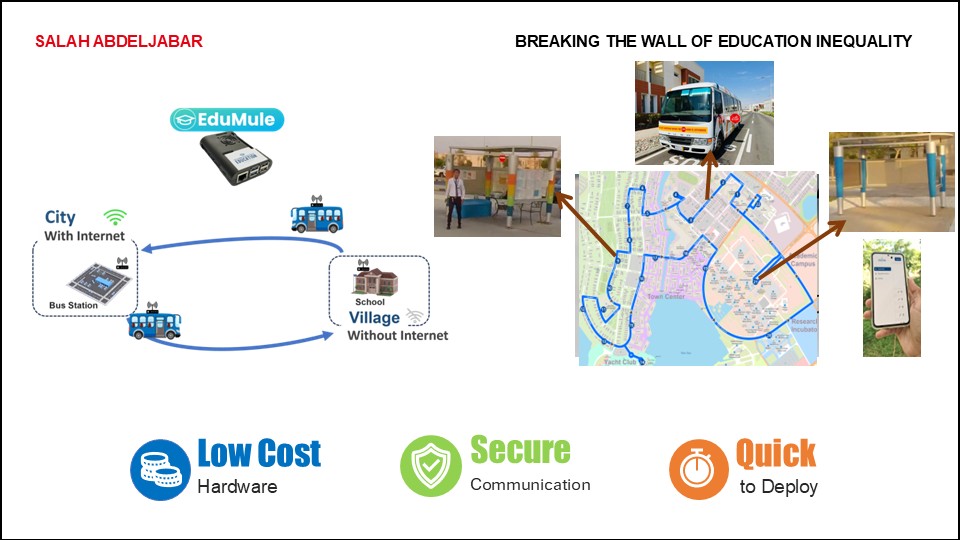
This project addresses the educational divide that persists in rural and remote regions where reliable internet access remains out of reach. The lack of connectivity prevents millions of learners from accessing digital educational resources, online courses, and interactive learning platforms that are taken for granted in well-connected areas.
The proposed delay-tolerant networking (DTN) framework offers a practical and affordable solution by leveraging existing transportation infrastructure as data mules to distribute educational content and collect learning feedback asynchronously. Instead of requiring expensive always-on connectivity, the system works with intermittent contact opportunities, storing data at nodes and forwarding it when vehicles pass through.
This approach provides Internet-like access to learning resources without requiring continuous connectivity, making quality digital education accessible to underserved communities. The framework is designed to be sustainable, scalable, and compatible with informal transport networks that already operate in rural areas.
Quick links
- Paper: Read the paper
- PDF: Download the PDF
System architecture
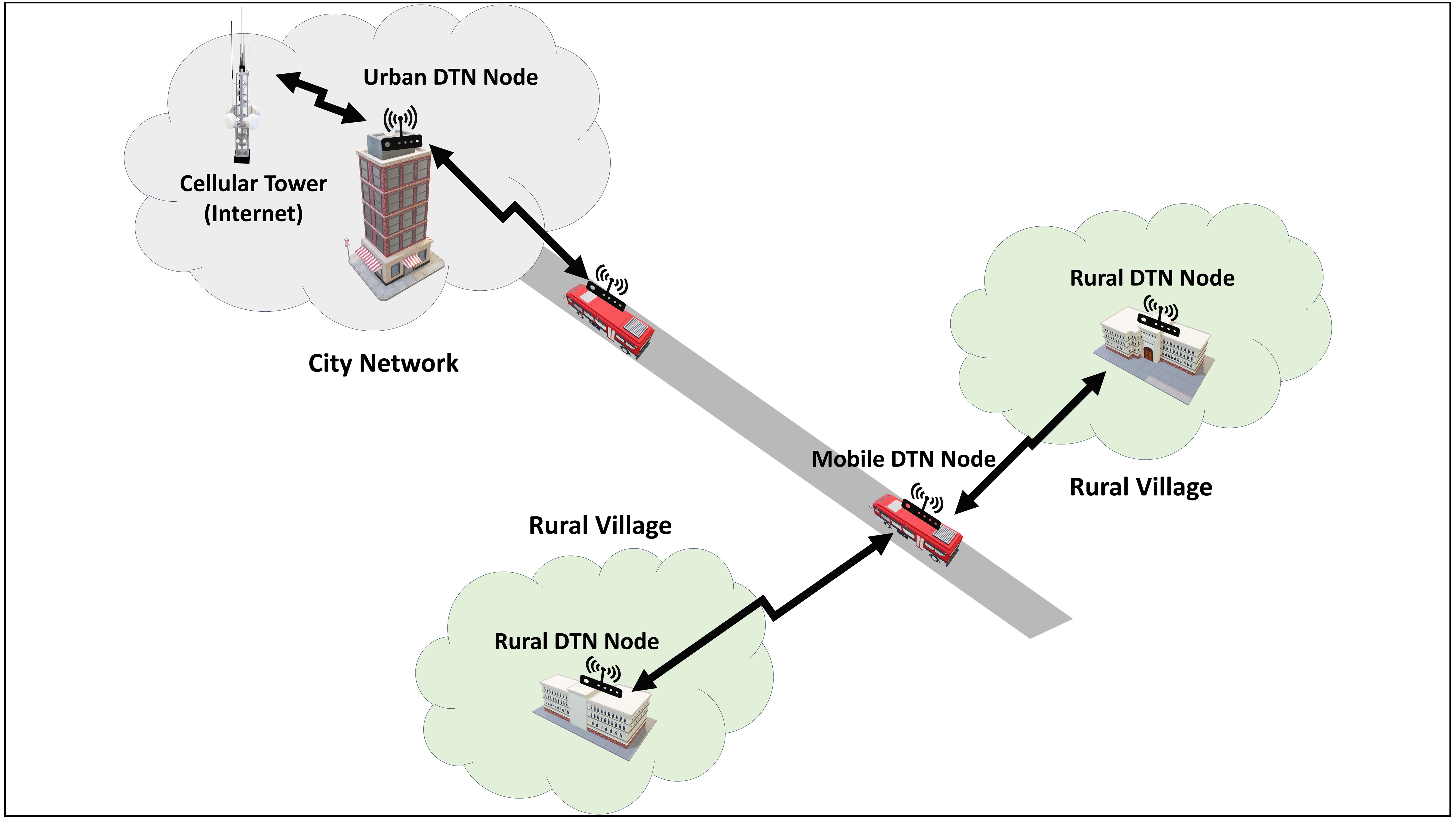
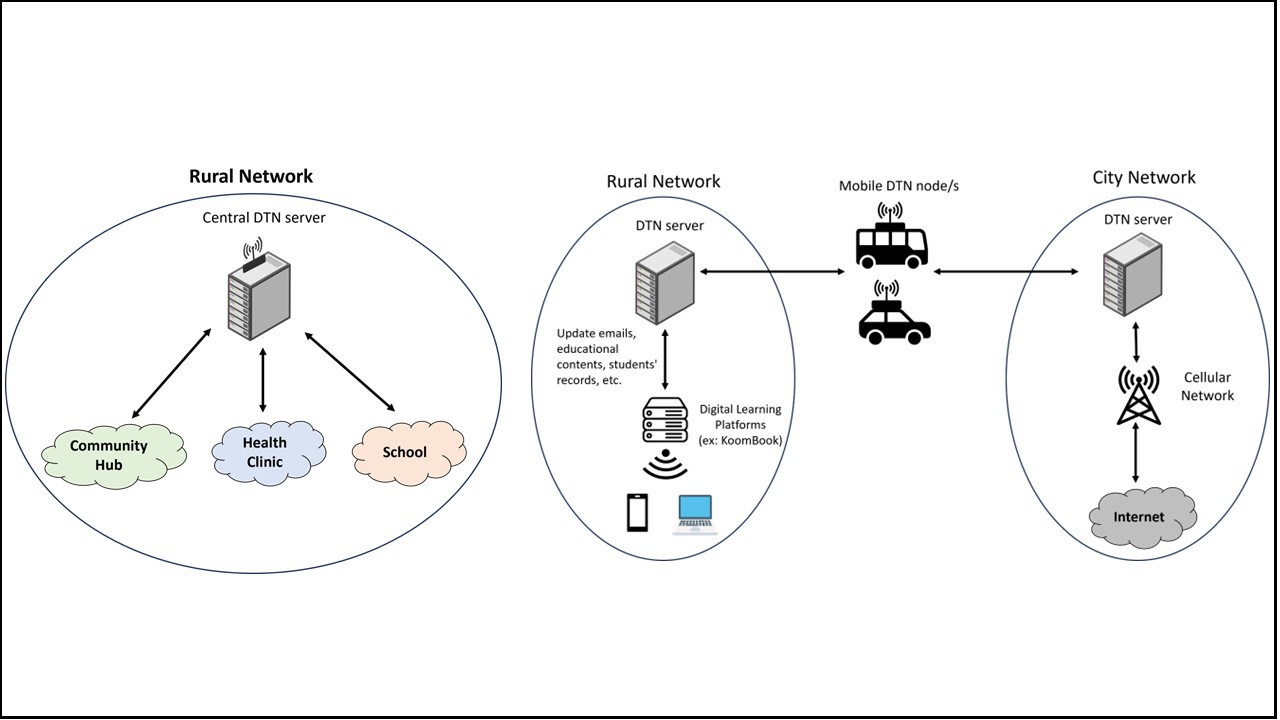
The system architecture is designed to support bidirectional data flow under intermittent connectivity, balancing the need for fresh content delivery with timely feedback collection.
The system is built around two core paths:
-
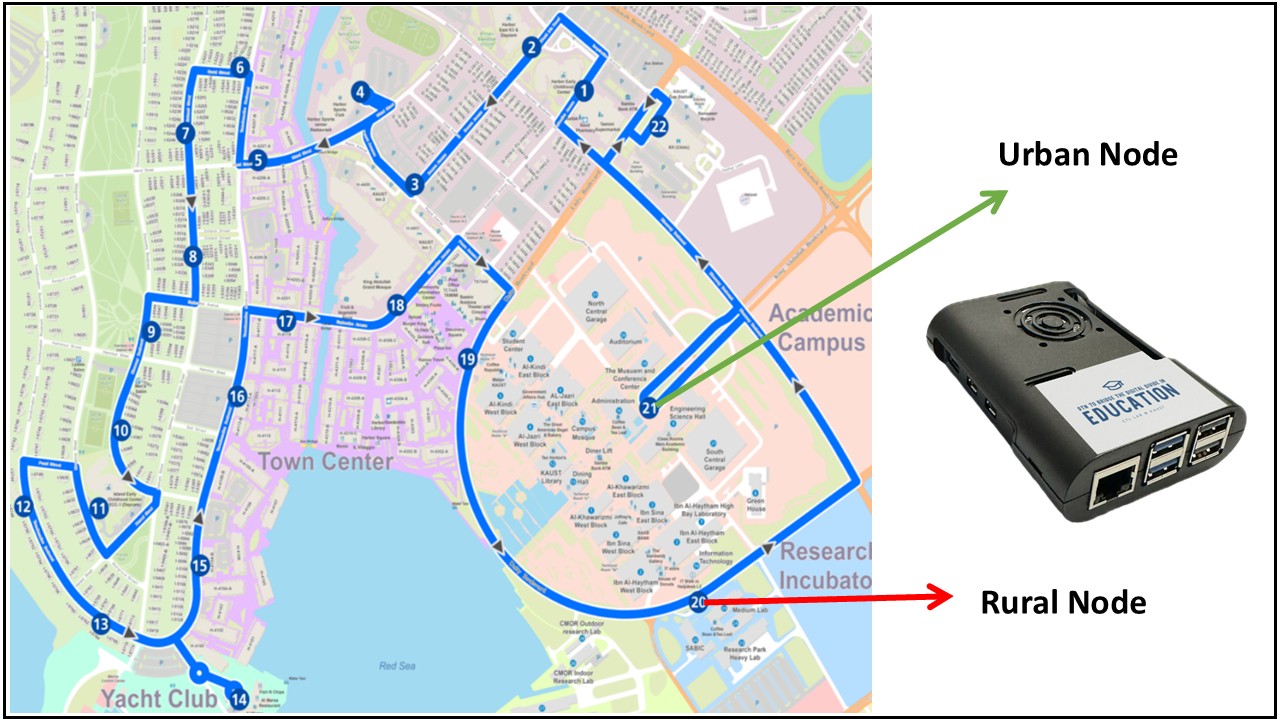
Content distribution path: Educational material (videos, PDFs, interactive lessons, quizzes) is pushed from a central gateway to rural schools and learning centers using mobile carriers. When a vehicle equipped with a DTN node arrives at a school, it transfers any new content available, creating a store-carry-forward chain that reaches even the most remote locations.
-
Feedback return path: Learner progress, quiz results, and analytics are collected at rural nodes and sent back to the gateway when contact opportunities arise. This enables educators and content providers to track learning outcomes and adapt materials accordingly.
The architecture ensures data persistence and prioritization, with intelligent buffering and scheduling to maximize the value of each contact window. Encryption and authentication mechanisms are built in to protect sensitive learner data during transit.
Prototype and application
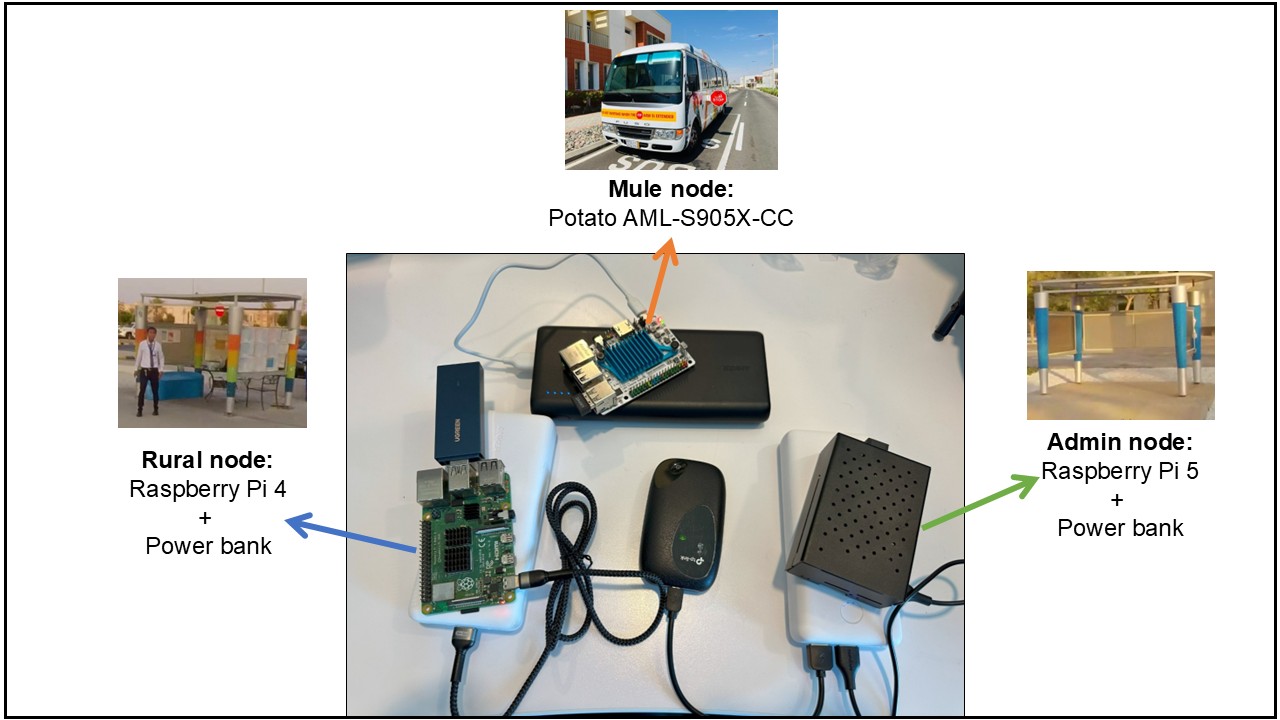
I built and evaluated a working DTN prototype to validate the end-to-end workflow for DTN-enabled digital learning platform. The experimental work focused on making the system practical under intermittent connectivity and quantifying how reliably content could move between the gateway and rural endpoints.
Key experimental tasks I carried out include:
- Integrating the DTN hardware nodes, storage, and gateway interfaces into a portable testbed.
- Running field-style trials to emulate store-carry-forward transfers and measure delivery success across contact windows.
- Instrumenting the system to log transfer timing, throughput, and synchronization behavior for analysis.
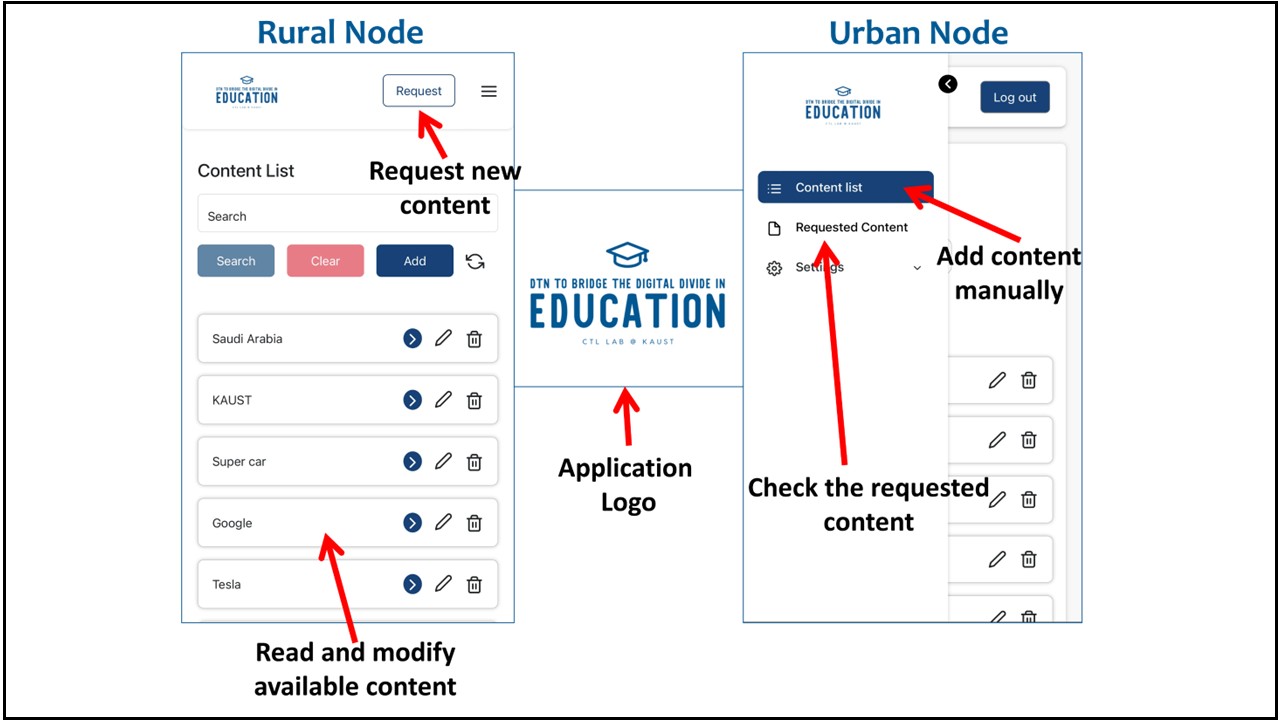
- Demonstrating the digital learning application end-to-end with real content updates and feedback uploads.
Recognition and outreach
- ICTP-Arab Fund PhD fellowship: I won the ICTP-Arab Fund PhD fellowship for a proposal tied to this DTN research line. Announcement
- Falling Walls Lab KAUST 2025 finalist: See the award page and presentation materials here: Falling Walls 2025
- Invited talk at ICTP workshop: “Case study of using DTN for informal/public transportation systems” at the Workshop on Empowering Connectivity: Bridging Space and Earth with DTN. Event page