
Hybrid RF/FSO Maritime Connectivity: Connecting Remote Islands
Published:
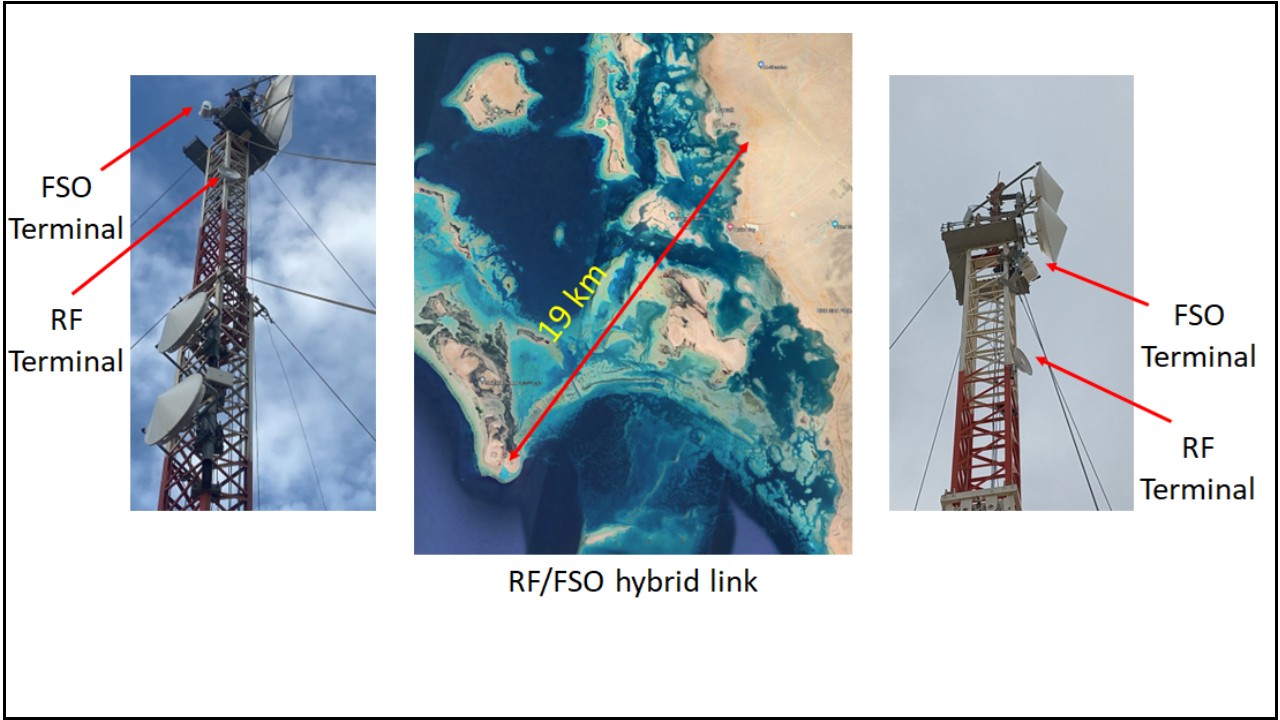
This project represents a breakthrough in maritime connectivity: a hybrid RF/FSO link deployed across 19 kilometers of open water to connect Shabara Island in the Red Sea with the mainland shore. Working alongside my colleague Fahad Alqurashi and under the supervision of Professor Mohamed-Slim Alouini at KAUST, I was responsible for designing and implementing the networking part of the project, including network architecture, switches configuration, redundancy planning, and security implementation to meet the data governance requirements of Red Sea Global.
Quick links
- IEEE Globecom 2024 publication: Read the paper
- Detailed PDF: View full paper
- KAUST CTL article: Towards better maritime connectivity
- Red Sea Global announcement: Cutting-edge FSO technology
- Arab News coverage: Wireless laser optics brings hope
- Saudi Gazette: Expanding high-speed connectivity
Project Overview
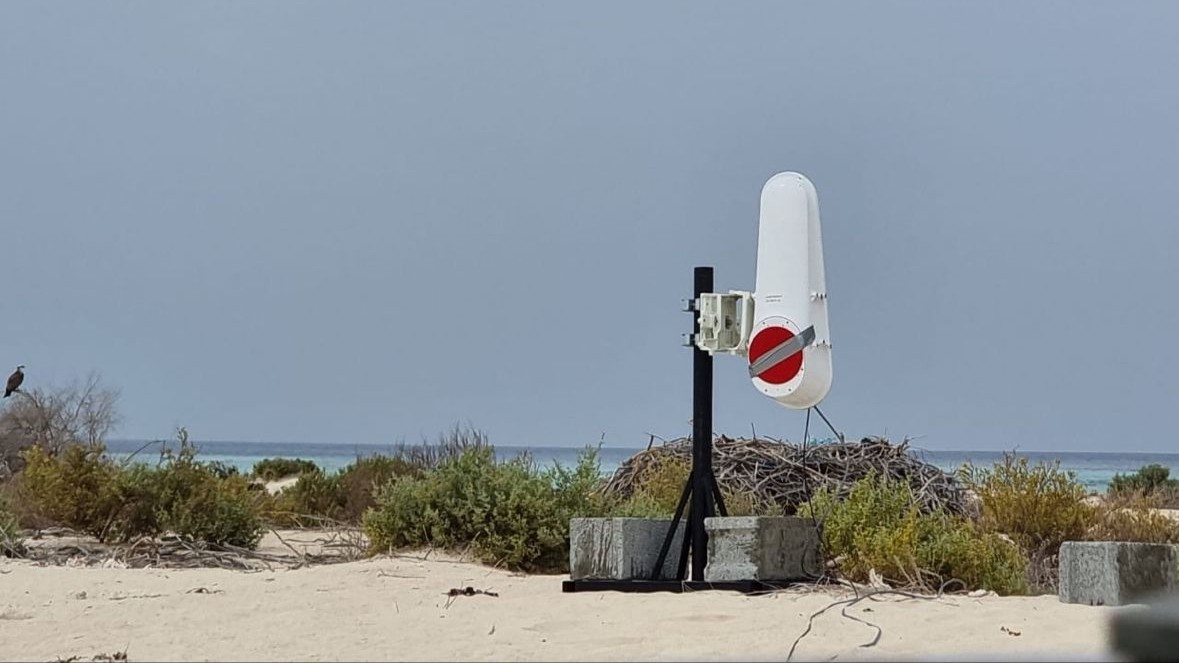
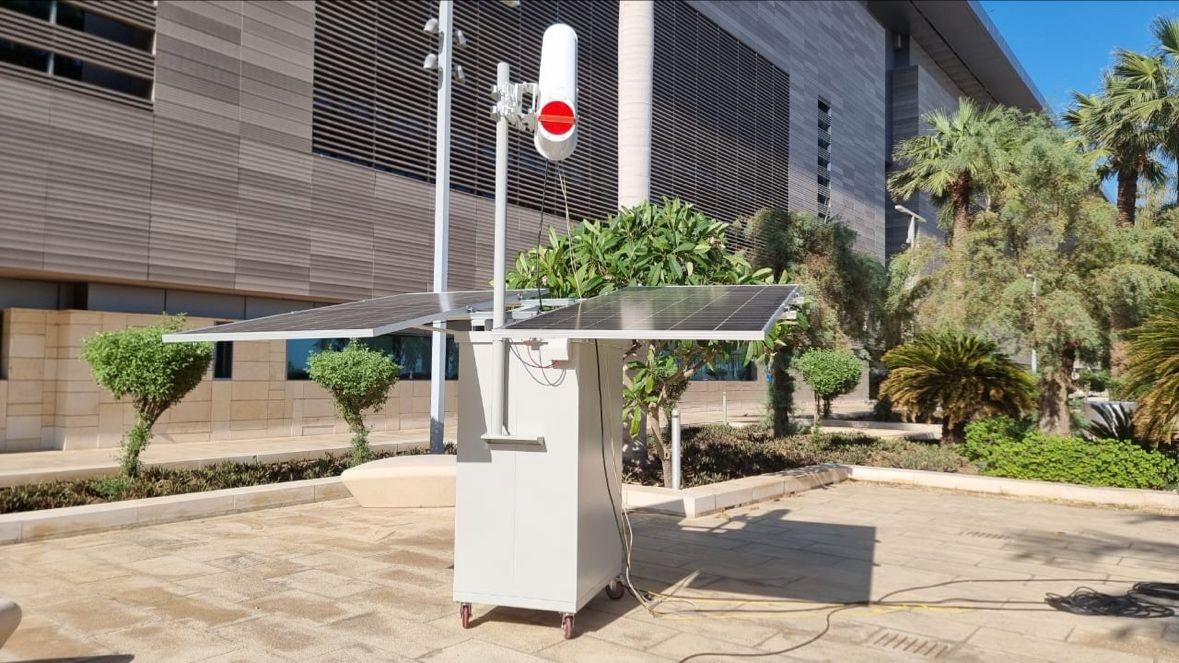
Traditional maritime connectivity faces significant challenges: fiber optic cables are prohibitively expensive and vulnerable to damage, while conventional RF links suffer from limited bandwidth, interference, and harsh propagation conditions including ducting and water surface reflections. The answer? Free Space Optics (FSO) – laser-based wireless communication capable of multi-gigabit speeds – backed up by a robust 6 GHz RF link for resilience.
My role centered on the networking backbone that makes this hybrid system practical for real-world deployment. This included:
- Network architecture design: Creating a redundant, scalable network topology that seamlessly handles failover between FSO and RF links
- Switch configuration: Implementing enterprise-grade managed switches with VLAN segmentation, QoS policies, and link aggregation, including the implementation of rapid spanning tree protocol (RSTP).
- Security implementation: Deploying defense-in-depth security practices including encrypted tunnels, firewall rules, intrusion detection, and access control to meet Red Sea Global’s data governance requirements
- Performance optimization: Fine-tuning network parameters for minimal latency and maximum throughput across the wireless hop
The Challenge: Connecting a Remote Island
Red Sea Global (RSG), the developer behind ambitious luxury tourism projects in Saudi Arabia’s Red Sea region, needed high-speed internet connectivity for construction operations on Shabara Island, located 19 km offshore. The island’s remote location and challenging environmental conditions – high temperatures exceeding 45°C, humidity, strong winds, and frequent sand/dust storms – made this an ideal test case for next-generation wireless technology.
The requirements were demanding:
- High bandwidth: Multi-gigabit speeds to support construction operations, future tourism infrastructure, and environmental monitoring
- High reliability: Near-constant connectivity (99.9%+ availability) for mission-critical operations
- Security: Enterprise-grade data protection and network security to meet regulatory compliance
- Sustainability: Solar-powered operation where possible to minimize environmental impact
- Scalability: Architecture that can be replicated across RSG’s multiple island properties
Network Architecture & Design
Part of my responsibilities is to designing a robust network architecture that could handle the unique challenges of a hybrid FSO/RF system operating over maritime distances. The architecture needed to be:
Resilient and Redundant
- Dual-link topology: FSO as primary (20 Gbps) with automatic failover to RF backup (1 Gbps)
- Fast failover: Sub-second detection and switchover to maintain active connections
- Link monitoring: Continuous health checks on both links with automated alerting
- Dual power systems: Primary and backup power with automatic transfer switches
FSO Technology & RF Backup
While my primary focus was network infrastructure, understanding the physical layer was crucial for optimal network design:
FSO Link Characteristics
- Data rate: 20 Gbps full duplex using infrared laser beams
- Range: 19 km across open water
- Availability: 98.71% uptime over 6+ months of operation
- Weather resilience: Operated through high temperatures, humidity, and dust storms
RF Backup Link
- Frequency: Unlicensed 6 GHz band
- Data rate: ~1 Gbps (sufficient for critical operations during FSO outages)
- Availability: Nearly 100% (complementary weather resilience to FSO)
- Combined availability: 99.999% (“five nines”) overall system uptime
Deployment Experience & Challenges
Results & Impact
The deployment exceeded expectations and demonstrated the viability of FSO for maritime connectivity:
Quantitative Results
- Combined availability: 99.999% (only ~5 minutes downtime per year equivalent)
- FSO availability: 98.71% (11 days downtime over 6 months)
- FSO throughput: Consistent 20 Gbps full duplex when operational
- Failover time: <500ms average switchover to RF backup
- Latency: 0.8ms average (FSO), 16ms average (RF)
Qualitative Impact
- Construction operations: Enabled real-time project management, video conferencing, and data transfer
- Proof of concept: Demonstrated FSO viability for RSG’s future island properties
- Research validation: Real-world data validated theoretical FSO performance models
- Technology transfer: Influenced RSG’s infrastructure planning for the broader Red Sea project
- Sustainability: Solar-powered terminals align with RSG’s environmental commitments
Broader Significance
This project demonstrated that FSO technology, combined with thoughtful network architecture and proper redundancy, can deliver fiber-like performance to locations where fiber is impractical. The lessons learned inform future deployments across:
- Remote islands and archipelagos in the region
- Coastal tourist destinations requiring high-speed connectivity
- Maritime environmental monitoring stations
- Emergency and disaster recovery scenarios
Media Coverage & Recognition
The project received significant media attention, highlighting its potential to transform connectivity in remote areas:
- KAUST CTL featured article: Towards better maritime connectivity with hybrid RF/FSO links
- Red Sea Global press release: Cutting-edge Free-Space Optics technology for super-fast internet
- Arab News: Wireless laser optics brings hope to expand high-speed connectivity in Saudi Arabia
- Saudi Gazette: Wireless laser optics bring hope to expand high-speed connectivity
The results were presented at IEEE Globecom 2024 in Cape Town, South Africa, one of the premier conferences in communications and networking. The paper was published in the IEEE Globecom Workshops proceedings.
Collaboration & Acknowledgments
This project was a collaborative effort involving:
- Fahad Alqurashi (KAUST PhD candidate): Led the overall project, FSO system selection and optimization, RF link configuration, and field measurements
- Professor Mohamed-Slim Alouini (KAUST): Project supervision and research direction
- Red Sea Global: Deployment site host, requirement specifications, and data governance framework
- KAUST Communication Theory Lab: Research infrastructure and support
- Taara (X, the moonshot factory): FSO hardware provider and technical consultation
My specific contributions focused on the networking aspects: architecture design, switch configuration and deployment, network security implementation, redundancy and failover mechanisms, performance optimization, and ongoing network operations and monitoring.
Publication: F. S. Alqurashi, S. Abdeljabar, A. Trichili, and M.-S. Alouini, “Overcoming Maritime Connectivity Challenges with Hybrid RF/FSO Links,” IEEE Globecom Workshops, Cape Town, South Africa, December 2024.
All photos in this article are courtesy of Fahad Alqurashi.