Workshop on TinyML Engineering for IoT
Workshop, KAUST Academy & ICTP, 2025
I served as Lead Teaching Assistant and Local Organizer for the Workshop on TinyML Engineering for IoT, held at KAUST in collaboration with KAUST Academy and the International Centre for Theoretical Physics (ICTP).
This intensive workshop brought together experts and participants to explore the intersection of machine learning and Internet of Things (IoT) devices.
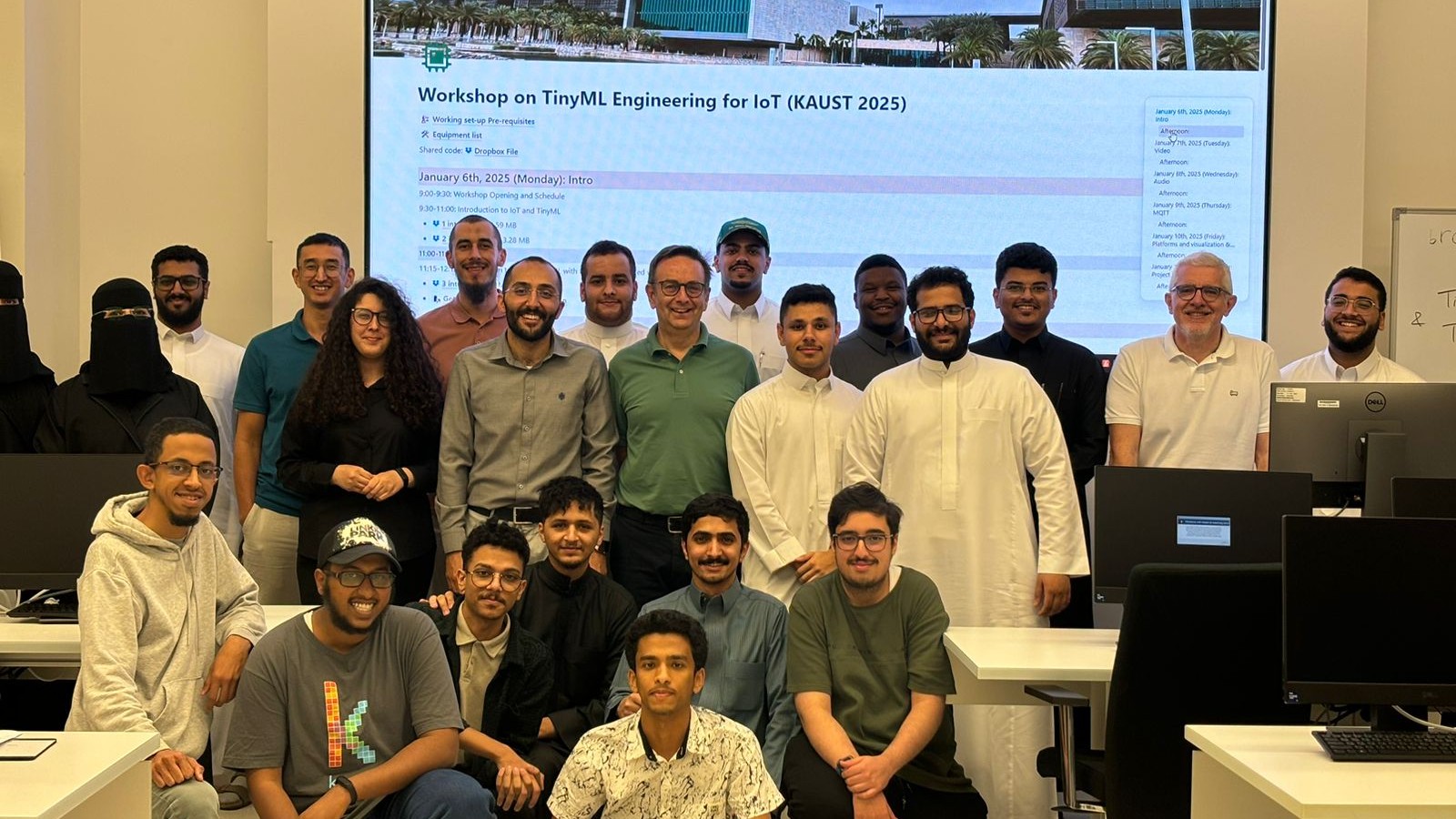
Collaborators:
- Prof. Marco Zennaro (ICTP, Italy)
- Prof. Pietro Manzoni (Universitat Politècnica de València, Spain)
Workshop Objectives
The workshop was designed to equip participants with comprehensive foundational knowledge of TinyML principles and their practical applications in edge computing and IoT systems. This included understanding how machine learning can be effectively deployed on resource-constrained devices to enable real-time inference at the edge.
Participants developed practical skills through hands-on experience implementing machine learning models directly on microcontrollers and embedded systems. These laboratory sessions provided direct exposure to the challenges and solutions involved in deploying neural networks on hardware with limited computational and memory resources.
The curriculum incorporated real-world applications through case studies and practical examples of TinyML implementations across various IoT domains, ranging from smart sensors to autonomous edge devices. These examples demonstrated how academic concepts translate to production environments and commercial applications.
Finally, participants learned best practices and optimization techniques for deploying ML models on microcontrollers and embedded systems, including model quantization, pruning, and efficient inference strategies that minimize power consumption and latency.
Key Responsibilities
As the Lead Teaching Assistant and Local Organizer, my role encompassed multiple dimensions of workshop delivery. I helped preparing comprehensive course materials covering TinyML fundamentals, edge device programming, and model optimization techniques. These materials served as the foundation for all instructional activities and were designed to bridge the gap between theoretical concepts and practical application.
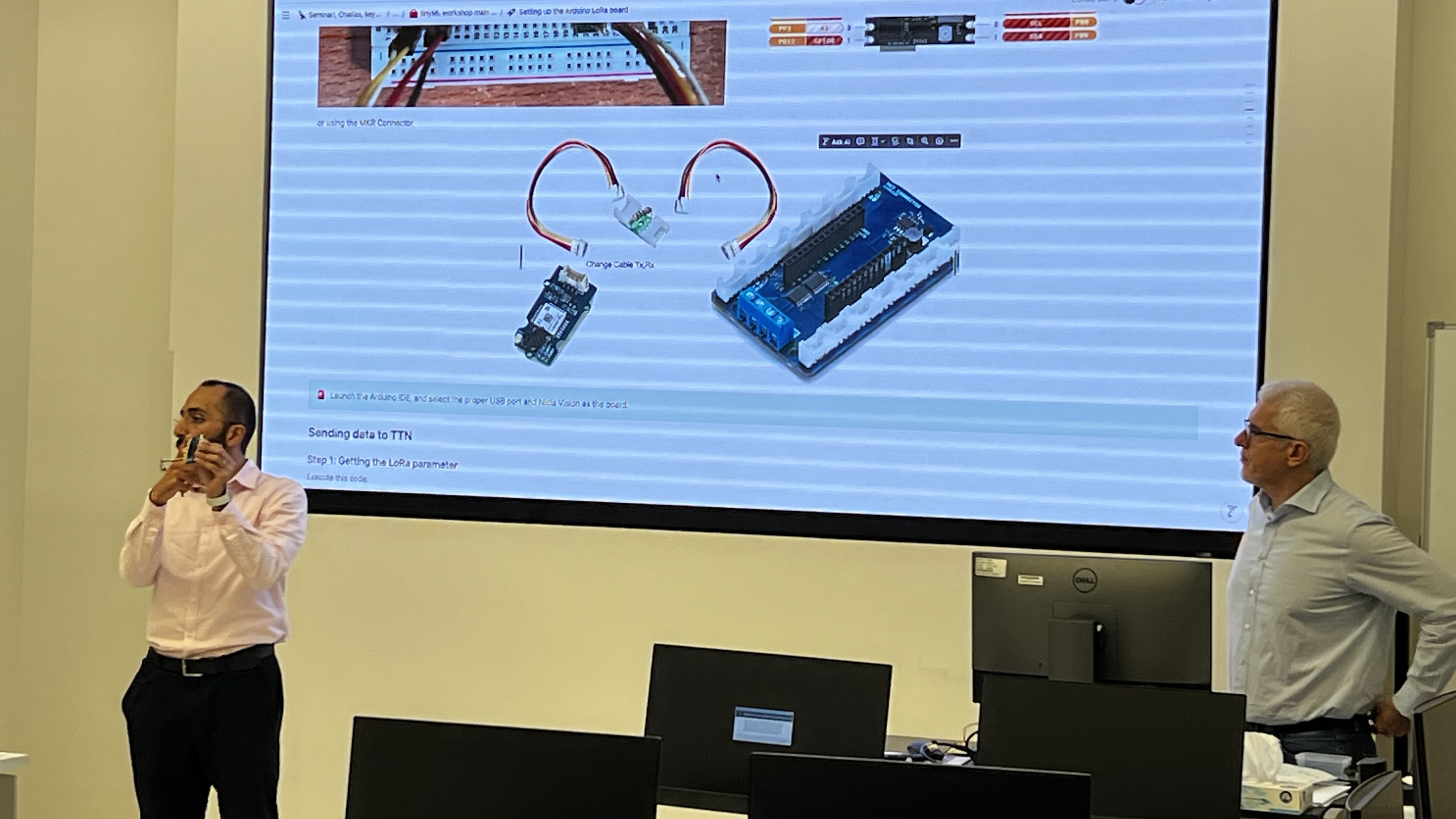
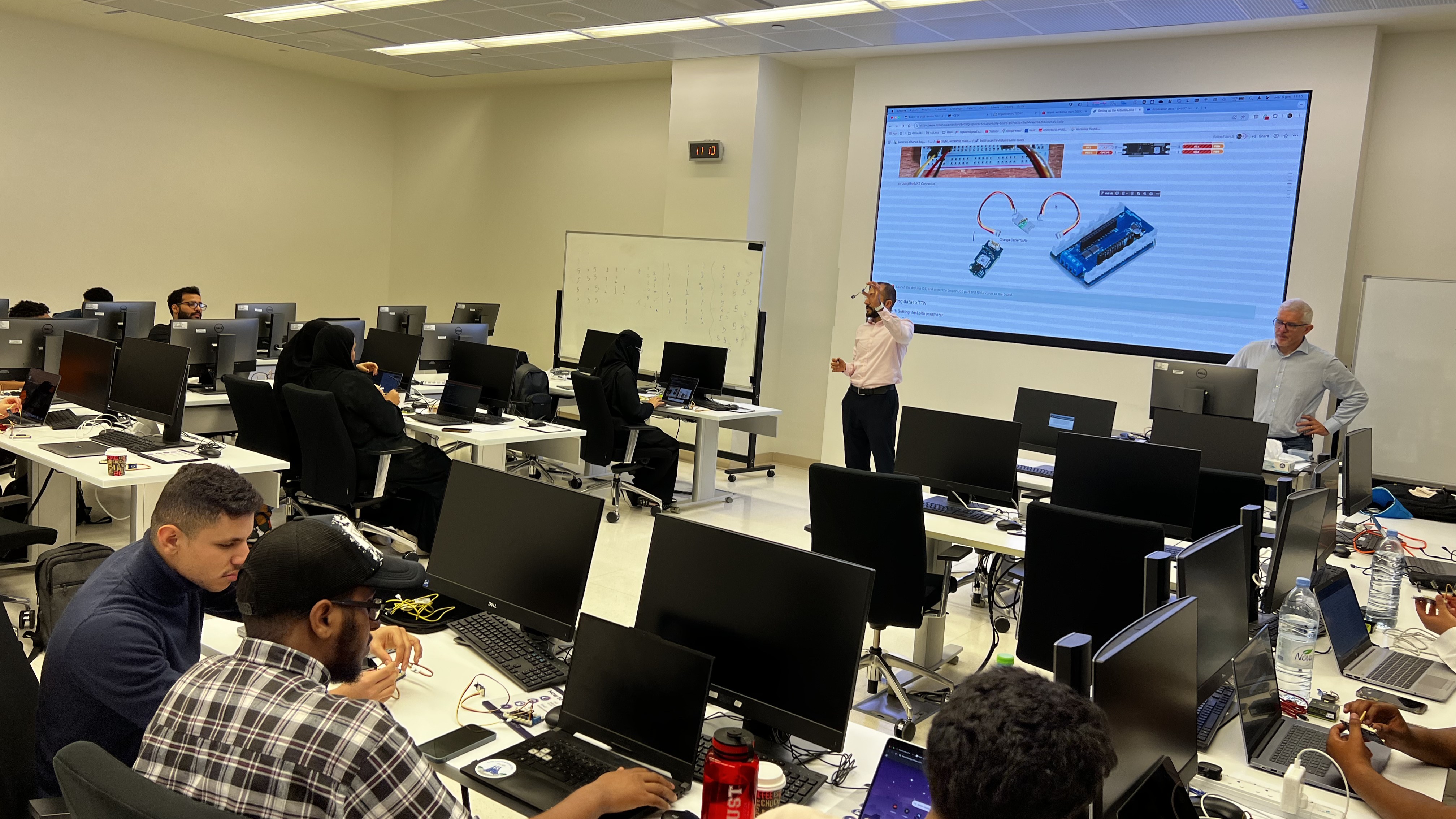
Presenting workshop overview and TinyML fundamentals to participants
Throughout the workshop, I led hands-on laboratory sessions that guided participants through the practical implementation of ML models on IoT devices. These sessions combined theoretical instruction with direct mentoring, allowing participants to gain real experience with state-of-the-art development tools and frameworks.
I also mentored participants on technical challenges and best practices for deploying machine learning on resource-constrained hardware. This included one-on-one guidance, troubleshooting assistance, and discussion of advanced optimization strategies. Additionally, I coordinated logistics between KAUST Academy and ICTP to ensure smooth delivery of the workshop, managing schedules, resources, and communication between all stakeholders.
Finally, I facilitated practical demonstrations showcasing real-world applications of TinyML in IoT scenarios, providing concrete examples of how participants could apply their newly acquired knowledge to solve actual problems in their research and professional activities.
Workshop Highlights
The workshop curriculum covered a comprehensive range of topics essential for understanding and implementing TinyML solutions. We began with machine learning fundamentals and their applications in IoT, establishing the theoretical foundation for why machine learning is transformative for edge computing. Participants learned how TinyML enables intelligent decision-making directly on devices, reducing latency and improving privacy by keeping sensitive data on the device.
The workshop provided an introduction to TinyML frameworks and tools, equipping participants with hands-on experience in the most widely-used development environments. Participants worked with state-of-the-art frameworks optimized specifically for deploying models on microcontrollers and embedded devices.
A critical focus area was model optimization and quantization techniques, which are essential for fitting neural networks into memory-constrained environments. We covered practical strategies for reducing model size and inference time without significantly sacrificing accuracy. This included discussions of integer quantization, pruning, and knowledge distillation techniques specifically tailored for embedded devices.
The workshop explored deployment strategies for edge devices, covering the complete pipeline from model training through integration into production IoT systems. Participants learned best practices for handling model updates, managing resources efficiently, and ensuring reliable operation in resource-limited environments.
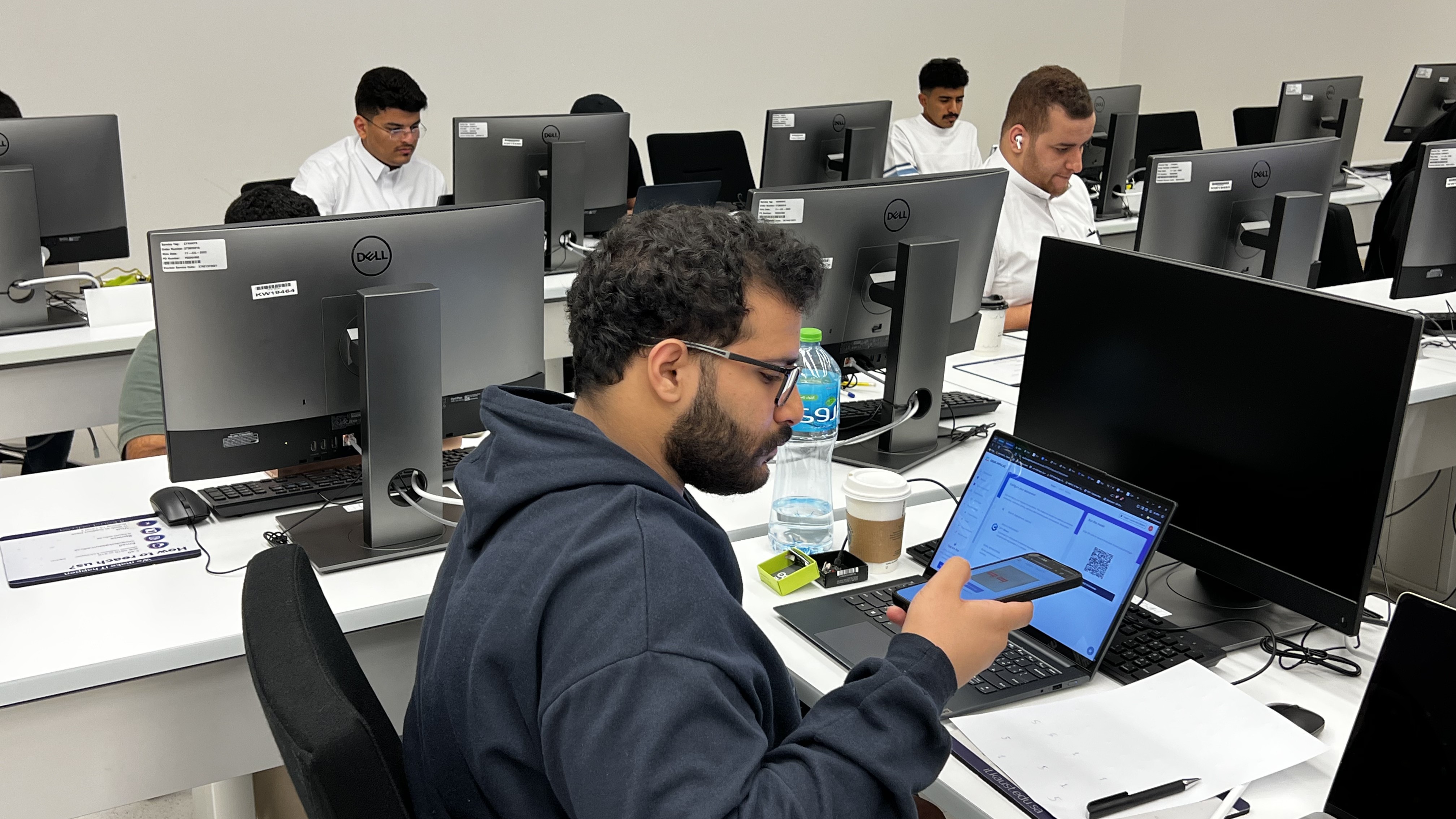
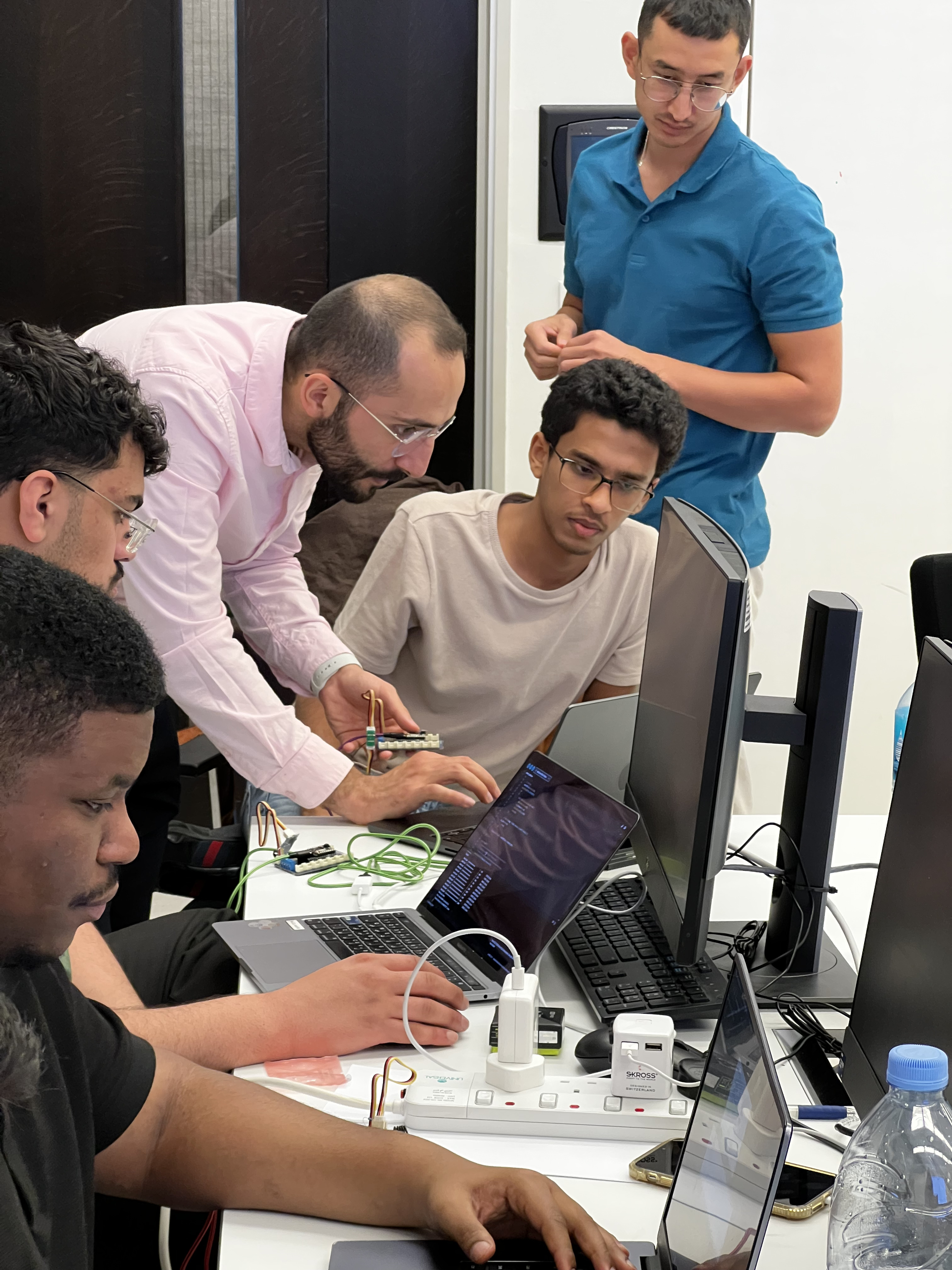
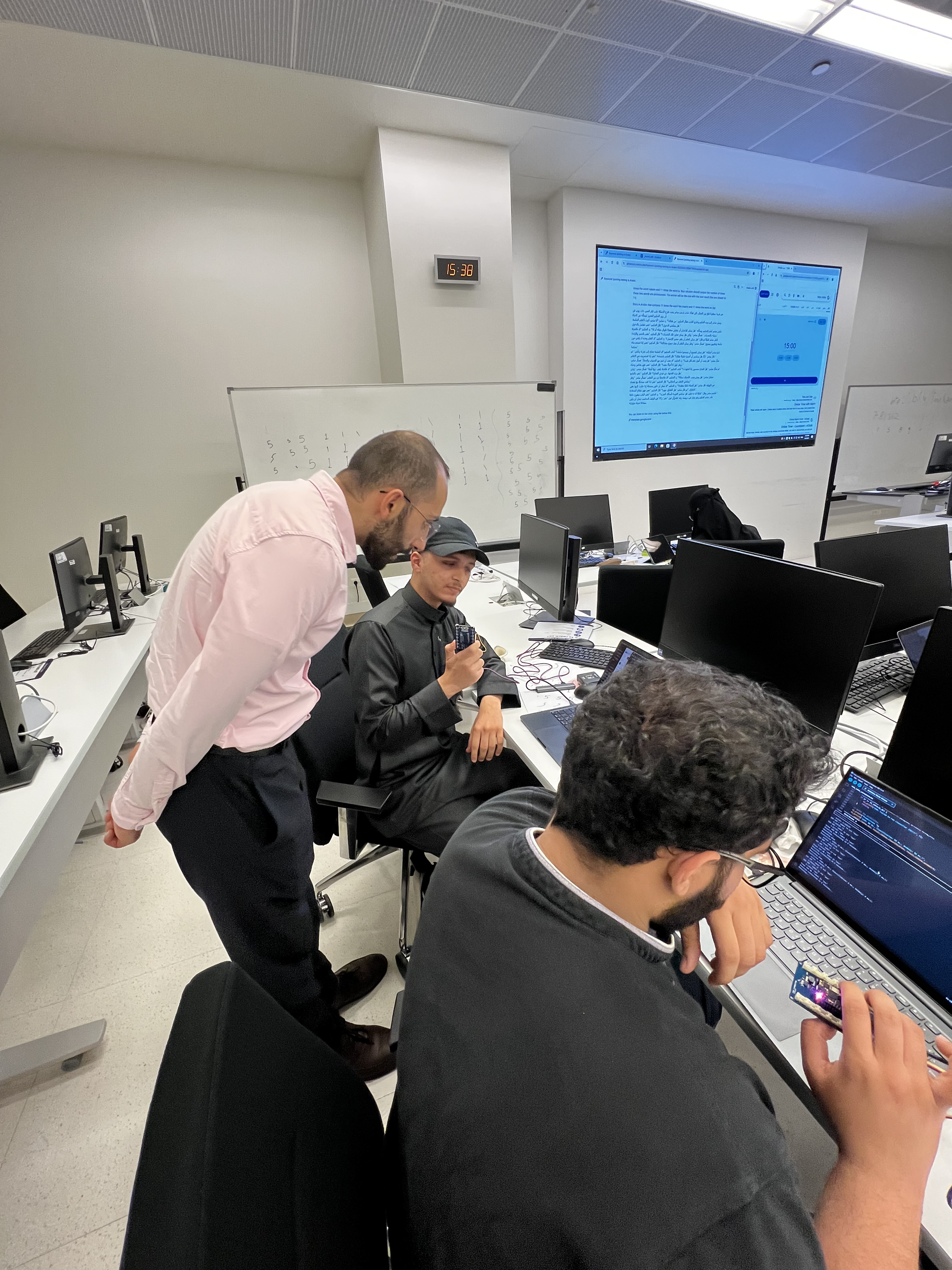
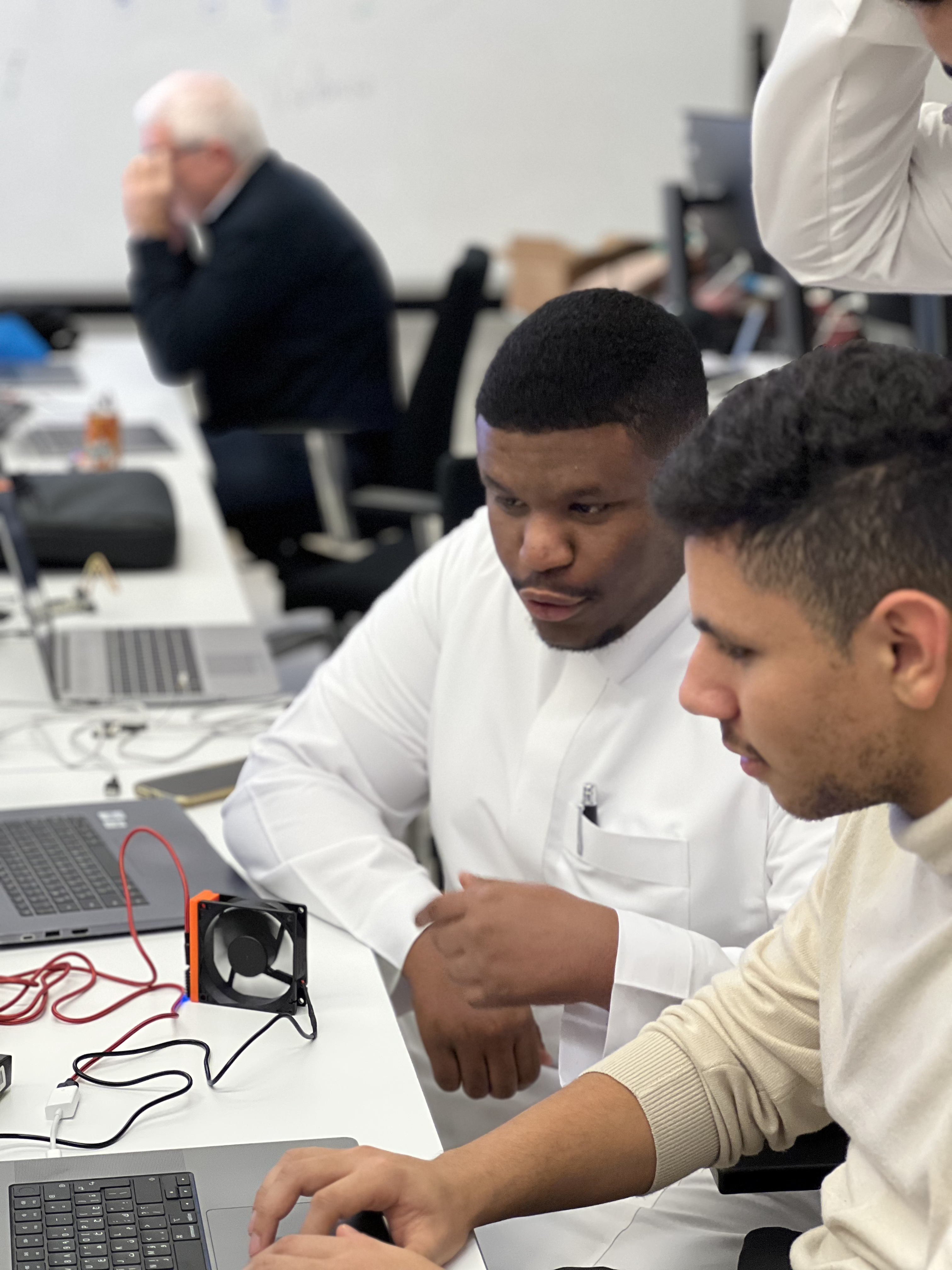
Participants testing trained ML models on edge devices during hands-on sessions
We also addressed performance evaluation and power efficiency considerations, which are critical metrics for IoT deployments. Understanding how to measure inference latency, power consumption, and accuracy trade-offs is vital for designing effective TinyML applications. The workshop included practical exercises in benchmarking and optimizing deployed models.
Finally, participants learned from practical case studies from various IoT domains, including smart sensors, environmental monitoring, predictive maintenance, and autonomous edge devices. These real-world examples demonstrated how TinyML principles are successfully applied across different industries and use cases. Through this comprehensive curriculum, participants gained both the theoretical understanding and practical experience needed to develop sophisticated TinyML applications for their own IoT systems.
Resources
Photo Gallery