
RIS-Assisted Visible Light Communication for Outdoor Applications
Published:
Project Overview
Visible Light Communication (VLC) has emerged as a promising technology for wireless connectivity, offering advantages such as license-free spectrum, high data rates, and enhanced security. However, outdoor VLC systems face critical challenges that have limited their widespread deployment: line-of-sight (LOS) blockage, transmitter-receiver misalignment, and user mobility.
This project explores how Reconfigurable Intelligent Surfaces (RISs) can revolutionize outdoor VLC systems by creating intelligent, reflective pathways that dynamically adapt to environmental conditions and overcome traditional limitations. By leveraging passive, software-controlled reflective elements, RIS technology enables robust optical wireless communication in challenging outdoor scenarios.
Project Recognition
This research was recognized with the Third-Place Prize at the 10th IEEE Conference on Technologies for Sustainability (IEEE SusTech 2023) Student Poster Contest in Portland, USA. The award acknowledges the innovative approach and significant potential impact on sustainable communication technologies.

The Challenge: Outdoor VLC Limitations
Traditional outdoor VLC systems face several fundamental obstacles:
Line-of-Sight (LOS) Blockage
Optical wireless systems require direct line-of-sight between transmitter and receiver. In outdoor environments, obstacles such as buildings, trees, vehicles, and even people can easily block these optical links, causing communication failures.
Transmitter-Receiver Misalignment
VLC systems are highly directional, requiring precise alignment between the light source and the photodetector. In dynamic outdoor environments with moving users, vehicles, or UAVs, maintaining this alignment is extremely challenging.
User Mobility
As users or devices move through outdoor spaces, the optical link quality degrades rapidly. Traditional VLC systems struggle to maintain stable connections when endpoints are mobile, which is essential for many modern applications like autonomous vehicles and UAV networks.
These challenges have historically confined VLC to mostly indoor, stationary applications. My research addresses how to break through these limitations using intelligent surface technology.
The Solution: RIS-Assisted VLC
What are Reconfigurable Intelligent Surfaces?
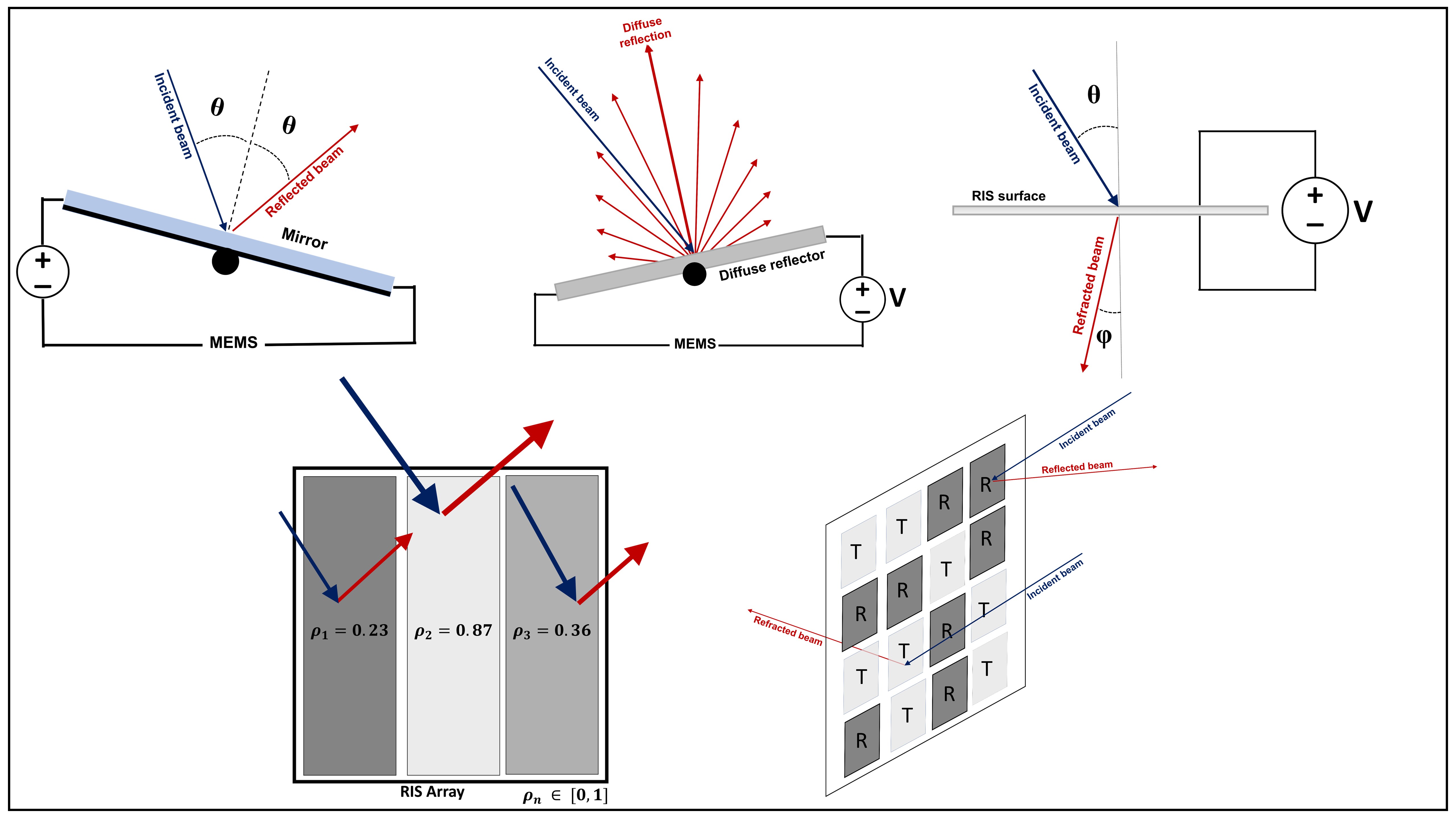
Reconfigurable Intelligent Surfaces represent a paradigm shift in wireless communications. An RIS consists of an array of passive elements that can be dynamically controlled to redirect, focus, or scatter electromagnetic waves—or in our case, light waves. Unlike active repeaters or relays, RIS elements offer several unique advantages. They are passive, meaning they don’t amplify signals or require significant power, making them highly energy-efficient. Their reflection properties are software-controlled and can be adjusted in real-time to adapt to changing conditions. The technology is highly scalable, as large arrays can be deployed cost-effectively compared to traditional active infrastructure. Most importantly, they are intelligent, capable of adapting to changing channel conditions and optimizing communication performance dynamically.
How RIS Transforms Outdoor VLC
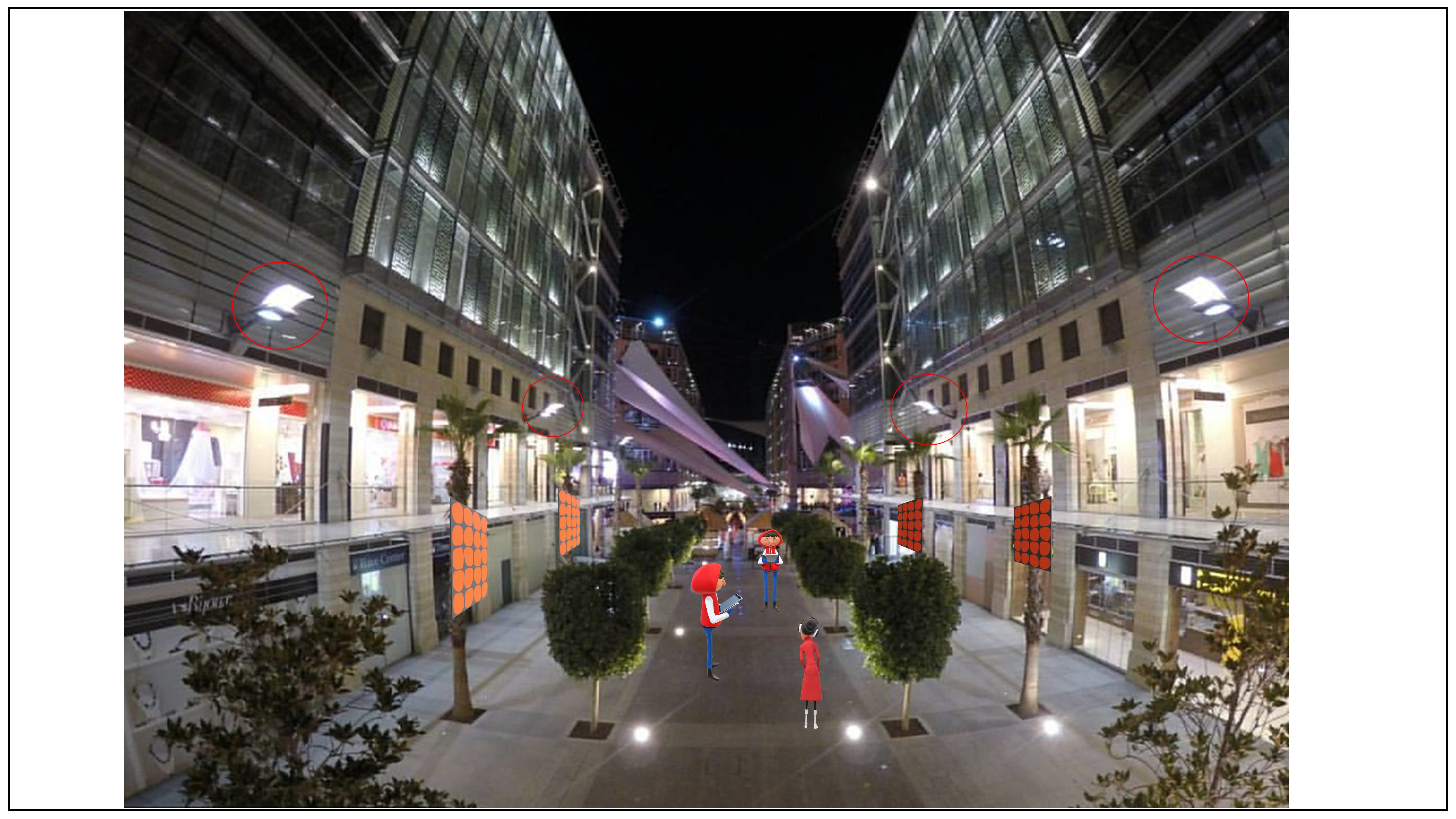
By strategically placing RIS elements in outdoor environments, we can create alternative optical pathways that circumvent obstacles and maintain reliable communication even when direct line-of-sight is blocked. The RIS elements act as intelligent mirrors that can be dynamically adjusted to address multiple challenges simultaneously. First, they create Non-Line-of-Sight (NLOS) paths by reflecting optical signals around obstacles, enabling communication even when direct visibility is blocked. Second, they compensate for misalignment by adjusting reflection angles to maintain connectivity despite transmitter or receiver movement. Third, they support user mobility by continuously adapting the reflection pattern as users or devices move through the environment. Finally, they optimize signal quality by focusing reflected light to maximize received signal strength at the intended receiver location.
Real-World Applications
The RIS-assisted VLC approach enables practical deployment across diverse outdoor scenarios:
UAV Networks
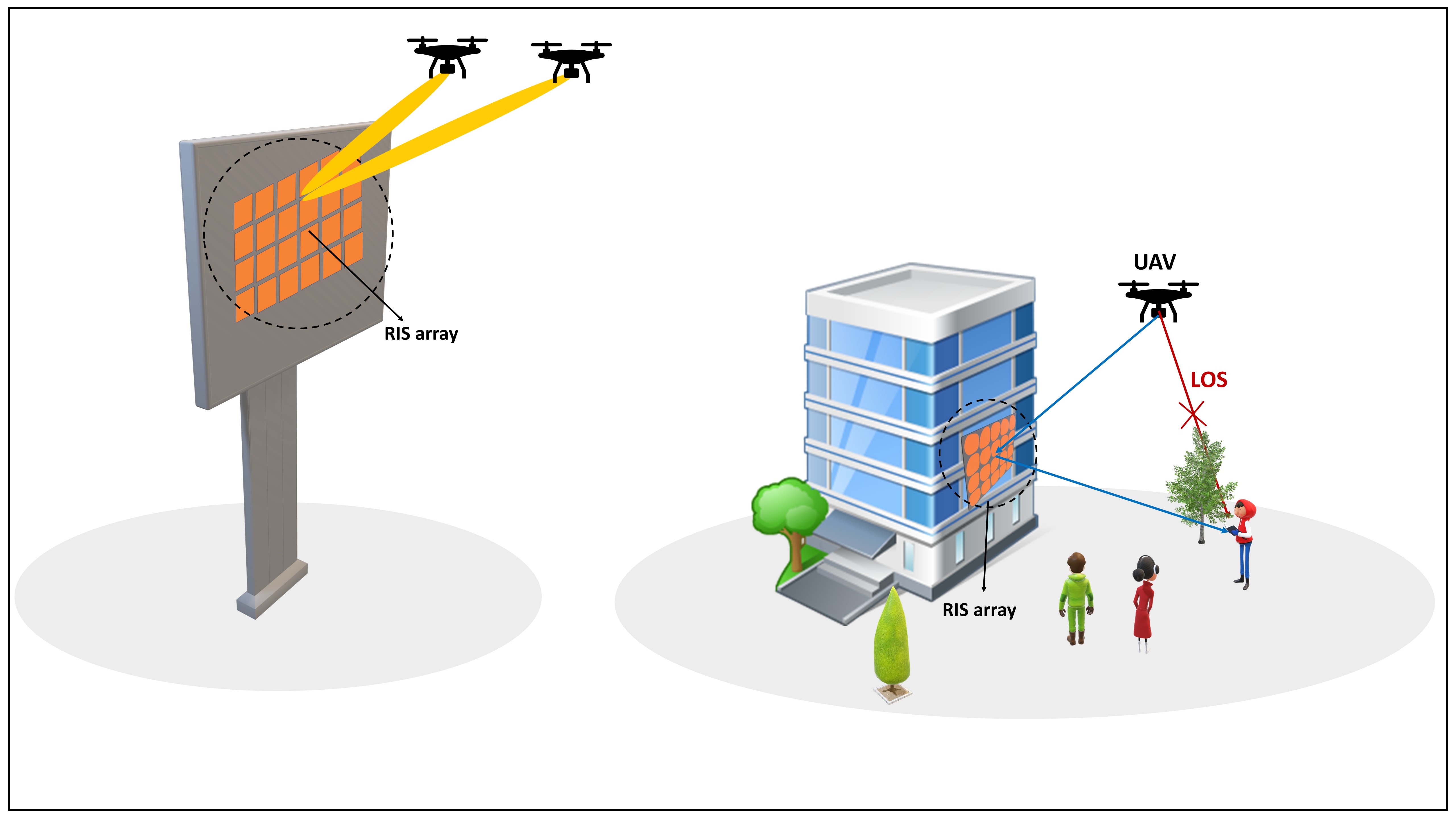
Unmanned aerial vehicles operating at high altitudes face unique communication challenges that RIS-assisted VLC is uniquely positioned to address. This technology enables high-altitude data collection and surveillance with enhanced reliability, while providing interference-free optical links between ground stations and UAVs that are immune to RF congestion. The system supports dynamic link adaptation as UAVs move across their operational area, continuously adjusting the RIS configuration to maintain optimal connectivity. Perhaps most significantly, it can support UAV swarms with multiple simultaneous optical connections, enabling coordinated operations and dense aerial networks.
Vehicle-to-Everything (V2X) Communications
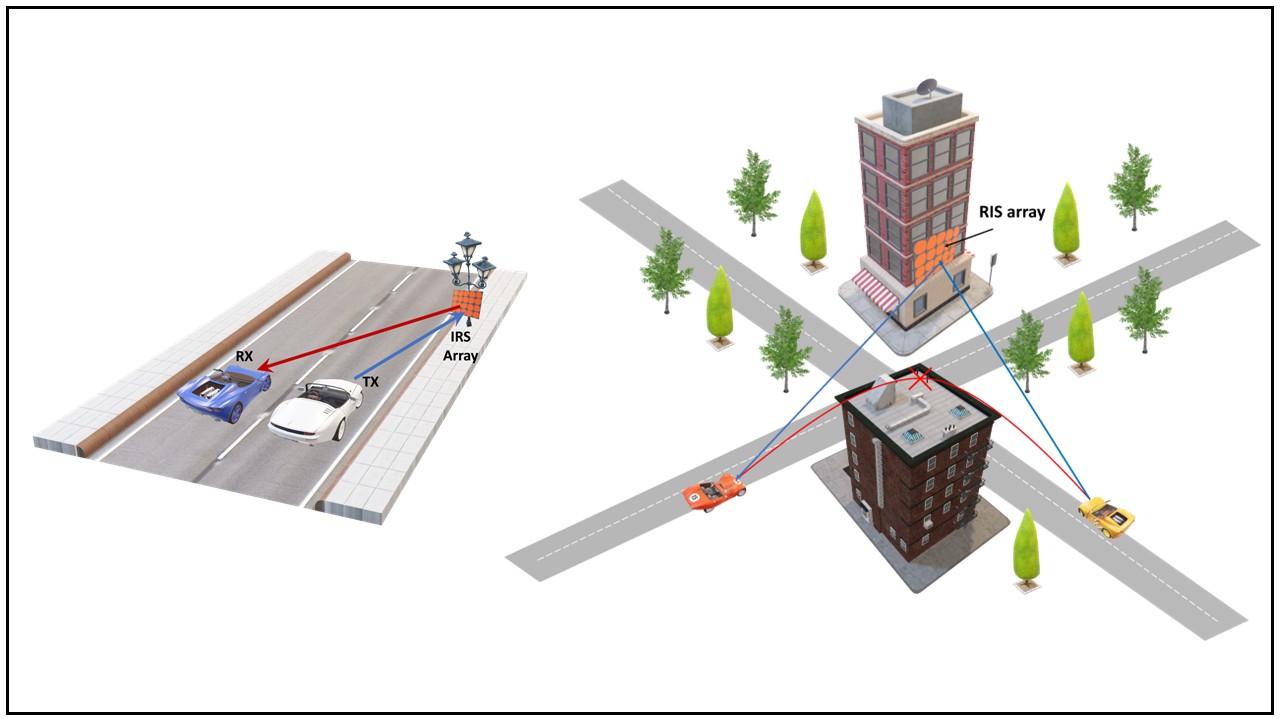
Autonomous vehicles and intelligent transportation systems require low-latency, high-reliability communication that RIS-assisted VLC can deliver. This technology enables vehicle-to-vehicle (V2V) optical links that work even when obstacles exist between vehicles, overcoming one of the primary limitations of traditional optical wireless systems. It facilitates vehicle-to-infrastructure (V2I) connectivity by leveraging existing streetlight and signage infrastructure as both light sources and RIS deployment platforms. The system enhances safety through redundant communication paths that can adapt to dynamic traffic conditions. Additionally, it provides the high data rate support necessary for advanced applications like sensor fusion and cooperative driving, where vehicles share detailed environmental information in real-time.
Outdoor-to-Indoor Communications
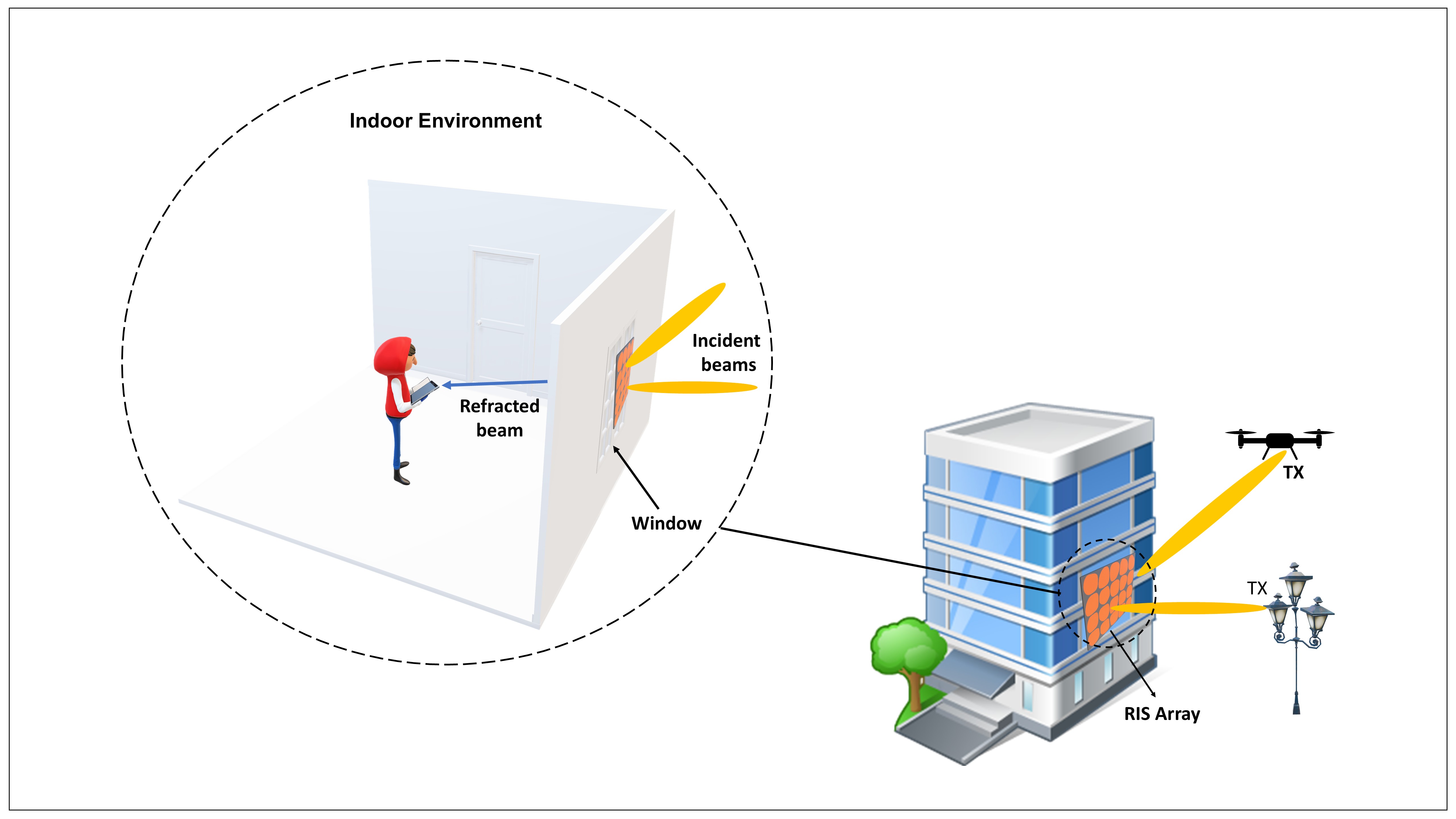
Bridging outdoor and indoor network domains is crucial for seamless connectivity, and RIS elements provide an elegant solution to this challenge. The technology enables optical signal penetration through windows and transparent surfaces by intelligently directing and focusing light beams, overcoming reflection and scattering losses. It supports last-mile connectivity using visible light infrastructure, potentially reducing deployment costs and leveraging existing outdoor lighting systems. This approach reduces reliance on traditional RF-based indoor systems, which often suffer from spectrum congestion and interference. Most importantly, it enables energy-efficient data delivery to indoor users from outdoor access points, creating a sustainable bridge between outdoor and indoor communication domains.
Smart City Infrastructure
RIS-assisted VLC can transform existing urban lighting infrastructure into a comprehensive communication network. The technology enables streetlight-based communication networks that provide city-wide coverage, turning municipal lighting systems into dual-purpose infrastructure. Smart building facades can act as both communication hubs and RIS elements, creating a dense network of reflective surfaces that improve coverage throughout urban canyons. Traffic signal coordination can be achieved using optical backhaul, providing high-bandwidth, interference-free links for intelligent transportation management. Furthermore, the system supports public WiFi offloading through VLC access points, reducing congestion on traditional RF networks and providing high-speed connectivity in crowded public spaces.
Research Impact and Recognition
IEEE Internet of Things Magazine Publication
This research was published in the IEEE Internet of Things Magazine, which features research on IoT technologies and applications. The paper presents analysis and insights into RIS-assisted outdoor VLC systems and their potential applications in wireless communications for IoT deployments.
Read the full publication here.
IEEE SusTech 2023 Award
This work was honored with third-place prize at the 10th IEEE Conference on Technologies for Sustainability (IEEE SusTech 2023) Student Poster Contest. The conference focuses on sustainable technology innovations, and this research was recognized for its significant potential to advance multiple sustainability goals. The technology enables energy-efficient optical wireless communications by using passive RIS elements that require minimal power compared to active repeaters and amplifiers. It leverages existing lighting infrastructure, reducing the need for dedicated communication hardware and minimizing deployment costs and environmental impact. By providing an alternative to power-hungry RF systems, it can reduce the overall environmental impact of communication networks. Perhaps most importantly, it supports sustainable smart city development by enabling intelligent, adaptive infrastructure that can evolve with changing urban needs while maintaining a small environmental footprint.
Read more about the award here.
6G Summit Abu Dhabi 2022
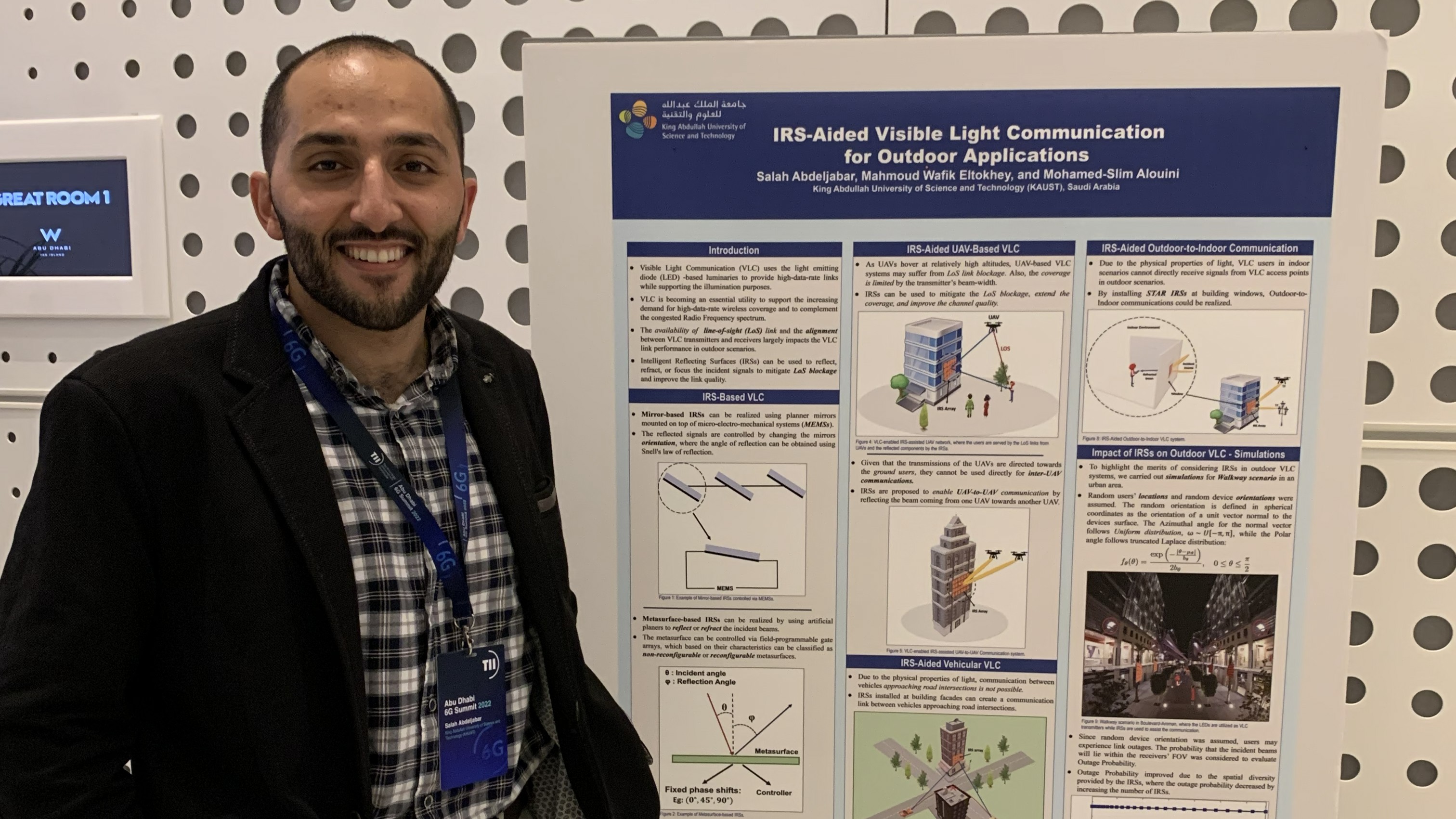
I presented this research as a poster at the 6G Summit in Abu Dhabi in 2022, where it attracted significant interest from researchers and industry professionals. The summit provided an excellent platform to discuss the future role of RIS-assisted VLC in next-generation wireless networks and to gather feedback from the broader 6G research community.
The discussions at the summit highlighted several important trends in the field. There is growing recognition that optical wireless communications will play a crucial role in 6G networks, complementing traditional RF technologies and enabling new use cases that require ultra-high data rates and enhanced security. Researchers and industry professionals alike observed that RIS technology is maturing rapidly and approaching readiness for practical deployment, with several pilot projects already underway worldwide. The conversation revealed that outdoor VLC applications are expanding beyond niche use cases into mainstream scenarios like smart cities and autonomous transportation. Finally, there was strong consensus that integration with RF systems can provide robust, high-capacity connectivity by combining the complementary strengths of both technologies, optical links for high throughput and RF links for reliability and coverage.
Future Directions
This project opens several exciting avenues for future research and development:
Hybrid RF-VLC Systems
Combining RIS-assisted VLC with traditional RF communications to create resilient, high-capacity outdoor networks that leverage the strengths of both technologies.
Machine Learning Integration
Applying AI/ML techniques to predict channel conditions, optimize RIS configurations in real-time, and automate network management in dynamic outdoor environments.
Experimental Validation
Moving beyond simulation to real-world testbeds and deployments, validating the theoretical findings and refining practical implementation strategies.
Standardization and Deployment
Working with industry partners and standards bodies to define protocols and specifications that enable widespread adoption of RIS-assisted outdoor VLC systems.
Key Takeaways
This project demonstrates several important findings that advance the field of outdoor optical wireless communications. Most fundamentally, RIS technology can overcome the key limitations that have historically confined VLC systems to indoor applications, making outdoor deployment not only feasible but practical and cost-effective. The passive nature of intelligent surfaces provides an energy-efficient solution that strongly aligns with global sustainability goals, requiring minimal power while delivering significant performance improvements. The research shows that multiple high-value applications, including UAV networks, V2X communications, and smart city infrastructure, can benefit substantially from this technology, indicating broad market potential. Importantly, the approach is compatible with existing VLC infrastructure, enabling incremental deployment and reducing barriers to adoption. Taken together, these findings suggest that outdoor optical wireless communications are now ready to move beyond research laboratories into real-world applications, with RIS technology serving as a key enabler for this transition.
The recognition at IEEE SusTech 2023 and the interest generated at the 6G Summit validate the significance of this work and its potential to shape the future of outdoor wireless communications.
Related Links